

When it comes to building a well-equipped gym — whether at home or in a commercial facility — two machines consistently rise to the top of the shortlist: the functional trainer and the multi-gym. Both are serious investments in strength training, but they serve different purposes, suit different users, and offer very different levels of versatility.
In this guide, we break down the key differences between functional trainers and multi-gyms to help you make the right choice for your space, goals, and budget.
1. What Is a Functional Trainer and How Does It Work?
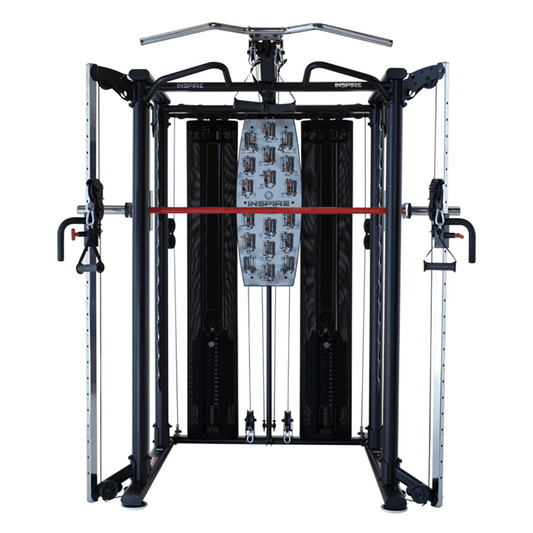
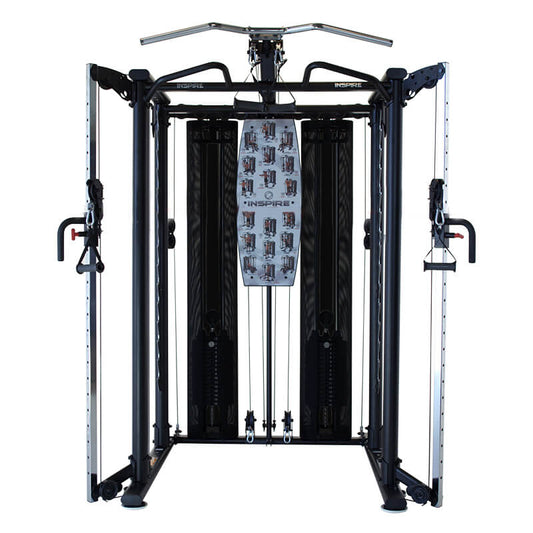
A functional trainer machine is a cable-based strength training system featuring two independently adjustable pulleys — typically mounted on a tall frame. Each pulley can be set at virtually any height, allowing you to perform exercises across a full range of motion and angles.
Because the cables move freely in three dimensions, functional trainers closely replicate natural, real-world movement patterns. This makes them exceptionally effective for:
- Compound and isolation exercises (chest flyes, rows, lat pulldowns, tricep pushdowns)
- Core and rotational training (woodchops, pallof press)
- Rehabilitation and mobility work
- Sport-specific and functional movement training
- Single-limb exercises to correct muscular imbalances
Most functional trainers accept a wide range of attachments — handles, bars, ankle straps, ropes — dramatically expanding the exercise library from a single machine. For a curated selection, explore our range of functional trainers.
2. What Is a Multi-Gym and Who Is It Best For?
A multi-gym machine is an all-in-one strength training station that combines multiple exercise stations into a single, self-contained unit. Depending on the model, a multi-gym may include a lat pulldown, chest press, leg press, pec deck, low row, and more — all using a weight stack or plate-loaded system.
Multi-gyms are purpose-built for structured, guided resistance training. They are ideal for:
- Beginners who benefit from fixed movement paths and built-in safety
- Home gym users who want a comprehensive workout from one machine
- Facilities that need multiple users to train simultaneously
- Anyone prioritising muscle isolation with consistent, repeatable form
The fixed cable and lever systems guide the user through a predetermined range of motion, reducing the learning curve and minimising injury risk for those new to resistance training. Browse our full range of multi-gyms to find the right fit for your facility.
3. Functional Trainer vs Multi-Gym: Key Differences in Versatility
This is where the cable machine vs multi-gym debate gets interesting. Here is a direct comparison across the dimensions that matter most:
| Feature | Functional Trainer | Multi-Gym |
|---|---|---|
| Range of motion | Fully adjustable, 3D movement | Fixed, guided paths |
| Exercise variety | 200+ exercises with attachments | 6–15 preset stations |
| Skill requirement | Moderate to high | Low to moderate |
| Space efficiency | Compact footprint, tall frame | Larger footprint, self-contained |
| Simultaneous users | Typically 1–2 | 2–4 depending on model |
| Rehabilitation suitability | Excellent | Moderate |
| Progressive overload | Fine-tuned via weight stack | Fixed increments per station |
| Attachment compatibility | High (universal) | Limited to included accessories |
In terms of raw versatility, the functional trainer leads — it is one of the most versatile gym equipment options available. However, the multi-gym wins on accessibility, structure, and the ability to serve multiple users at once.
4. Which Option Is Better for Home Gyms?
For home gym buyers, the decision often comes down to training experience, available space, and long-term goals.
Choose a functional trainer if:
- You have intermediate to advanced training experience
- You want maximum exercise variety from a single machine
- You train alone and prioritise functional, sport-specific, or rehabilitation-focused work
- Your space is limited in floor area but has adequate ceiling height
Choose a multi-gym if:
- Multiple household members will use the machine at different fitness levels
- You or a family member is new to strength training and benefits from guided movement
- You want a structured, all-in-one solution with minimal setup
- You prefer a machine that covers the major muscle groups without requiring additional attachments
For many home gym users, the functional trainer is the best strength machine for home gym setups where versatility and long-term progression are the priority. Explore our full strength equipment collection to compare options side by side.
5. Which Machine Works Best for Commercial Gyms?
In a commercial gym environment, both machines earn their place — but for different reasons.
Functional trainers are a staple of modern commercial facilities. Their ability to accommodate a near-unlimited variety of exercises makes them popular with personal trainers, group training programmes, and members at all levels. A single functional trainer can replace several individual cable machines, making it a space-efficient and cost-effective investment for commercial gym strength equipment.
Multi-gyms shine in commercial settings where throughput matters. A multi-station multi-gym allows several members to train simultaneously on different muscle groups, reducing wait times during peak hours. They are also well-suited to hotel gyms, corporate wellness centres, and rehabilitation facilities where guided, low-barrier equipment is preferred.
For larger commercial facilities, the ideal solution is often both: functional trainers for versatility and personal training zones, and multi-gyms for structured, high-throughput training areas.
6. Final Verdict: Functional Trainer or Multi-Gym – Which Should You Choose?
There is no single right answer — the best machine depends on your specific context.
- For maximum versatility and long-term training progression: The functional trainer is the clear winner. It adapts to your goals, accommodates advanced programming, and remains relevant as your fitness level evolves.
- For accessibility, structure, and multi-user convenience: The multi-gym delivers a complete, guided strength training experience with minimal learning curve.
- For commercial facilities: Consider both. A functional trainer anchors your training floor, while a multi-gym serves members who prefer fixed-path resistance training.
At Sole Fitness Singapore, we stock a premium range of both functional trainers and multi-gyms from trusted brands, with local support and expert guidance to help you choose the right machine for your space and goals. Browse our complete strength equipment range or contact our team for a personalised recommendation.